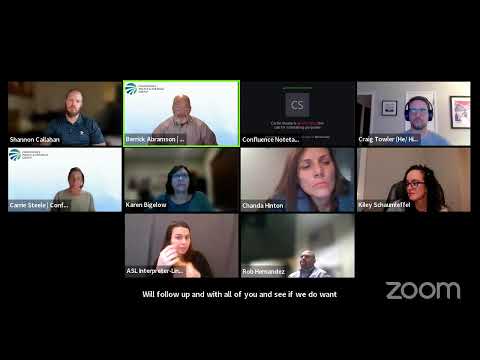
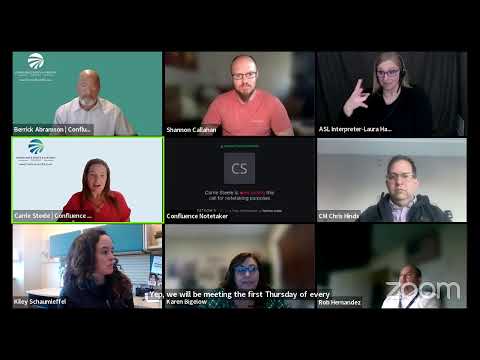
Task Force Related to the Rights of Coloradans with Disabilities - Government Subcommittee
This task force has completed it's required research for the JBC.
The Colorado General Assembly recently passed HB23-1296 that created a task force to study rights for persons with disabilities.
The purpose of the government subcommittee is to study and make recommendations on issues to ensure people with disabilities have access to the services they need, are able to effectively participate in public discussion, are able to be employed by governmental agencies, and can run for and effectively serve in elected positions. The government subcommittee shall submit a report with its findings and recommendations to the task force on or before December 1, 2024.
The Colorado General Assembly recently passed HB23-1296 that created a task force to study rights for persons with disabilities.
The purpose of the government subcommittee is to study and make recommendations on issues to ensure people with disabilities have access to the services they need, are able to effectively participate in public discussion, are able to be employed by governmental agencies, and can run for and effectively serve in elected positions. The government subcommittee shall submit a report with its findings and recommendations to the task force on or before December 1, 2024.
Share Your Story with the Task Force Members
-
Share Ensuring Equitable Access to Federal Benefits: A Governmental Responsibility to Coloradans with Disabilities on Facebook Share Ensuring Equitable Access to Federal Benefits: A Governmental Responsibility to Coloradans with Disabilities on Twitter Share Ensuring Equitable Access to Federal Benefits: A Governmental Responsibility to Coloradans with Disabilities on Linkedin Email Ensuring Equitable Access to Federal Benefits: A Governmental Responsibility to Coloradans with Disabilities link
Ensuring Equitable Access to Federal Benefits: A Governmental Responsibility to Coloradans with Disabilities
by Teresavia, 11 months ago🏛️ Ensuring Equitable Access to Federal Benefits: A Governmental Responsibility to Coloradans with Disabilities
By:TERESA VILLA
Legal Analysis
Submitted to the Task Force Related to the Rights of Coloradans with Disabilities – Government Subcommittee
đź§ Overview
Federal disability benefits particularly Social Security Disability Insurance (SSDI) and Supplemental Security Income (SSI) are a lifeline for thousands of Coloradans living with disabilities. Yet systemic flaws in benefit administration continue to expose individuals to unlawful garnishments, delayed payments, and even eviction, despite protections enshrined in federal and state law.
This article highlights urgent legal and administrative issues impacting the disabled community in Colorado... Continue reading
🏛️ Ensuring Equitable Access to Federal Benefits: A Governmental Responsibility to Coloradans with Disabilities
By:TERESA VILLA
Legal Analysis
Submitted to the Task Force Related to the Rights of Coloradans with Disabilities – Government Subcommittee
đź§ Overview
Federal disability benefits particularly Social Security Disability Insurance (SSDI) and Supplemental Security Income (SSI) are a lifeline for thousands of Coloradans living with disabilities. Yet systemic flaws in benefit administration continue to expose individuals to unlawful garnishments, delayed payments, and even eviction, despite protections enshrined in federal and state law.
This article highlights urgent legal and administrative issues impacting the disabled community in Colorado and outlines specific governmental interventions recommended to the subcommittee.
⚖️ 1. Protecting Exempt SSDI Benefits from Improper Garnishment
Despite clear federal statutes (42 U.S.C. § 407) prohibiting garnishment of SSDI funds by private creditors, Coloradans continue to report bank account freezes and seizures due to erroneous or unenforced legal exemptions.
Problems Identified:
•Inconsistent application of the Safe Harbor Rule by financial institutions.
•Lack of awareness or enforcement support from state courts regarding exempt funds.
•Delays in judicial relief, even when benefits are wrongly frozen.
Recommendations:
•Issue statewide judicial guidance affirming federal SSDI protections.
•Establish a Colorado Treasury Compliance Monitor to ensure banking institutions correctly apply garnishment exemptions.
•Provide legal aid funding specifically for SSDI garnishment disputes.
⏳ 2. Addressing Delays in SSI Backpay Distribution
Delayed SSI backpay leaves claimants vulnerable to housing insecurity, food instability, and interrupted medical care. Federal regulations obligate SSA to act with “reasonable promptness,” but that standard is often unmet in practice.
Colorado Impact:
•Reports of six-month or longer delays in SSI backpay among individuals approved through appeal.
•Lack of state-level advocacy mechanisms for SSA accountability.
Recommendations:
•Collaborate with Colorado’s Congressional delegation to demand SSA transparency and timeliness.
•Fund a State Disability Benefits Ombudsperson to support claimants navigating payment delays.
•Develop a State-SSA Coordination Agreement to fast-track emergency benefit cases (e.g., pending evictions).
🏠3. Preventing Eviction Due to Benefit Processing Failures
Benefit-related income interruptions are a silent driver of eviction in Colorado’s most vulnerable communities. Many tenants lack legal representation and are unaware of defenses rooted in federal benefit law.
Current Gaps:
•ERAP programs often do not accept SSA confirmation delays as documentation for eligibility.
•Housing courts do not always pause proceedings when the sole reason for nonpayment is SSA delay.
Proposed Actions:
•Modify Colorado ERAP eligibility to include “SSA Delay Confirmation” as valid hardship proof.
•Mandate a 60-day eviction stay if tenant provides evidence of pending federal disability benefit.
•Provide training for housing court judges on SSDI/SSI administrative delays as legal defense.
📌 Conclusion
Ensuring equitable access to SSDI and SSI is not only a federal duty it is a state-level mandate to uphold civil rights, prevent poverty, and protect the health of Coloradans with disabilities. This Task Force has a critical role in recommending reforms that strengthen legal protections, improve benefit access, and prevent harm caused by bureaucratic failures.

-
Share Programs and Services - What is not working, What would help on Facebook Share Programs and Services - What is not working, What would help on Twitter Share Programs and Services - What is not working, What would help on Linkedin Email Programs and Services - What is not working, What would help link
Programs and Services - What is not working, What would help
by Ethan, over 1 year agoApplying for any program is like pulling out your own teeth. There seem to be programs to help with almost everything but it's almost impossible even with help to find out where they are, what you have to do to qualify, and actually get them.
Health First is based on GROSS income per month?? What??
SNAP benefits are based on very confusing metrics and what is the same month to month can suddenly change and despite talking to multiple people no one can tell you why. Recently mine (for two adults) went from 292 per month to 130. I told... Continue reading
Applying for any program is like pulling out your own teeth. There seem to be programs to help with almost everything but it's almost impossible even with help to find out where they are, what you have to do to qualify, and actually get them.
Health First is based on GROSS income per month?? What??
SNAP benefits are based on very confusing metrics and what is the same month to month can suddenly change and despite talking to multiple people no one can tell you why. Recently mine (for two adults) went from 292 per month to 130. I told the person I was speaking to that neither myself or my roommate had a pay increase and was just told to re-apply. We cannot eat on that little with the ever-increasing cost of groceries. Especially since as disabled adults often we have to rely on things that are already prepared and easy to eat, because we seldom have the ability to cook for ourselves. Not to mention that it does not include anything that is not food. I was receiving a benefit of 200 per month while waiting for my SSDI determination, which as anyone could tell you often takes years, and stopped receiving it once I began to make more than 200 per month. It seems that any benefit you can receive is woefully out of date for how much things cost, especially in one of the most expensive places to live in the state. Any of these programs would be impossible to navigate efficiently for someone who is disabled and cannot rely on trusted friends or relatives.
What would help? Trying to be as concise as possible; making resources plainly available. I think anyone who signs up for any service at all ought to receive either in person or in the mail a packet of information about services offered. Include every cash-assistance program, rent-assistance, Healthcare provider that accepts Medicaid and Medicare, including mental health professionals, and organizations dedicated to helping people with disabilities navigate these programs. Like a quick reference phone book.
- Allotting more funds to at the very least SNAP programs. And reevaluating the relevance of current income limits to account for rising costs. I also think more open and accessible education for the general public on the purpose of these programs and their importance would help reassure those who are concerned about where their tax money is going. The myth of the disabled person living large off of others' paychecks is extraordinarily damaging to any further attempts to fund or put through state legislation protecting disabled people.
It has to be said that with the barriers currently in place, including the lack of mask or vax mandates in places that require in-person access such as doctor's offices, hospitals, and aid offices, as well as the lack of navigational support and restrictions on finances, that it arguably creates more opportunity for non-disabled people with the ability and resources to "game the system" than it does for those who need the help to access it.
- What would happen if changes occurred? If these things were made affordable and easier to access, I and many other disabled Coloradans would be able to enjoy a much improved quality of life, the ability to engage with our communities, and be more self-sufficient. Rates of petty crime, theft, and drug use would decrease significantly.
- What would happen if nothing changes? Either people will flee somewhere with less overwhelming cost, and ultimately much less support and assistance, be institutionalized or jailed as a result of the inability to access care, become overly reliant upon the aging population of their more well-equipped family members, or often, commit suicide.
Everyone is suffering, across the country. Disabled people are the last to be considered, and the first to be sacrificed. Our community members are precious, and important, and worth caring for and, and more varied than it is possible to guess. I appreciate your time and attention.
-
Share Running for office with a disability on Facebook Share Running for office with a disability on Twitter Share Running for office with a disability on Linkedin Email Running for office with a disability link
Running for office with a disability
by Tracy Crespin , over 1 year agoOne of the main hurdles I face as Deaf/HOH person is making sure that I get an interpreter for all meetings. It is the responsibility of the person doing interviews to pay and provide an interpreter; to ensure I have equal access. Many times people don’t want to have to pay and go through the hassle of securing an interpreter. I can’t tell you how many hours I've spent fighting with doctors' offices or other offices to make sure they provide an ASL interpreter. City council meetings don’t have Close Captioning in English to help follow the meetings on Zoom... Continue reading
One of the main hurdles I face as Deaf/HOH person is making sure that I get an interpreter for all meetings. It is the responsibility of the person doing interviews to pay and provide an interpreter; to ensure I have equal access. Many times people don’t want to have to pay and go through the hassle of securing an interpreter. I can’t tell you how many hours I've spent fighting with doctors' offices or other offices to make sure they provide an ASL interpreter. City council meetings don’t have Close Captioning in English to help follow the meetings on Zoom. In person meetings are not accessible to me at all due to not having an interpreter. The second issue I face is knocking on doors and being able to effectively communicate with people. Being able to hear soft spoken people is extremely hard for me. Talking on the phone is another issue and making sure that I understand what people are saying makes for very frustrating conversation for not only me but the person I’m talking to. Big gatherings are overwhelming and tiring for me. People ask, why not just wear hearing aids? Because I spend more time fixing, cleaning and trying to adjust my hearing aids to fit different situations. I miss most of what is happening around me. Really good hearing aids are $4,0000 plus and most insurance companies don’t cover them. Most people expect me as a hard of hearing person to adapt to hearing people. Hearing people struggle to adapt to having to deal with someone who is hard of hearing. If you want deaf people to have a place at the table you have to create access for them. All, meetings on Zoom should have Closed Captioning and so should all videos made by the city. Provide interpreters when interviewing a Deaf person for a board or office position. Fight to make hearing aids more affordable or to be covered by insurance. Those are all ways to support making sure more deaf people run for office.
Tracy Crespin
Government Subcommittee Members
Chanda Hinton
Councilman Chris Hinds
Councilwoman Karen Bigelow
Craig Towler
Kiley Schaumleffel
Robert Hernandez
Shannon Callahan
Teresa Nguyen
Government Subcommittee Meeting Materials
Government Subcommittee Meeting Videos
-
Click here to play video
Government Subcommittee December 2023
December 14, 2023
-
Click here to play video
Government Subcommittee Meeting January 2024
-
Click here to play video
Government Subcommittee February 2024
-
Click here to play video
Government Subcommittee March 2024
-
Click here to play video
Government Subcommittee April 2024
Contact Us
-
TF
-
Task Force Facilitators
Phone 303-551-6989 Email inquiry@confluencepsg.com -
KP